Project snapshot
- Project
- Custom CB Radios
- Type
- eCommerce
- Sector
- CB radios and specialist repair
- Live website
- customcbradios.com ↗
This case study describes the public-facing project and the design/SEO principles visible in the finished work. It does not claim private traffic, revenue or ranking results that are not publicly verified.
Business and search context
The public website has to serve more than one intent. A visitor may be shopping for CB or 10-meter radios, comparing accessories, looking for repair help, or trying to understand which equipment belongs together. That makes information architecture central to both usability and organic search. Category paths need to be clear, service content needs to remain discoverable, and the homepage has to establish the specialist positioning quickly.
Structure and product discovery
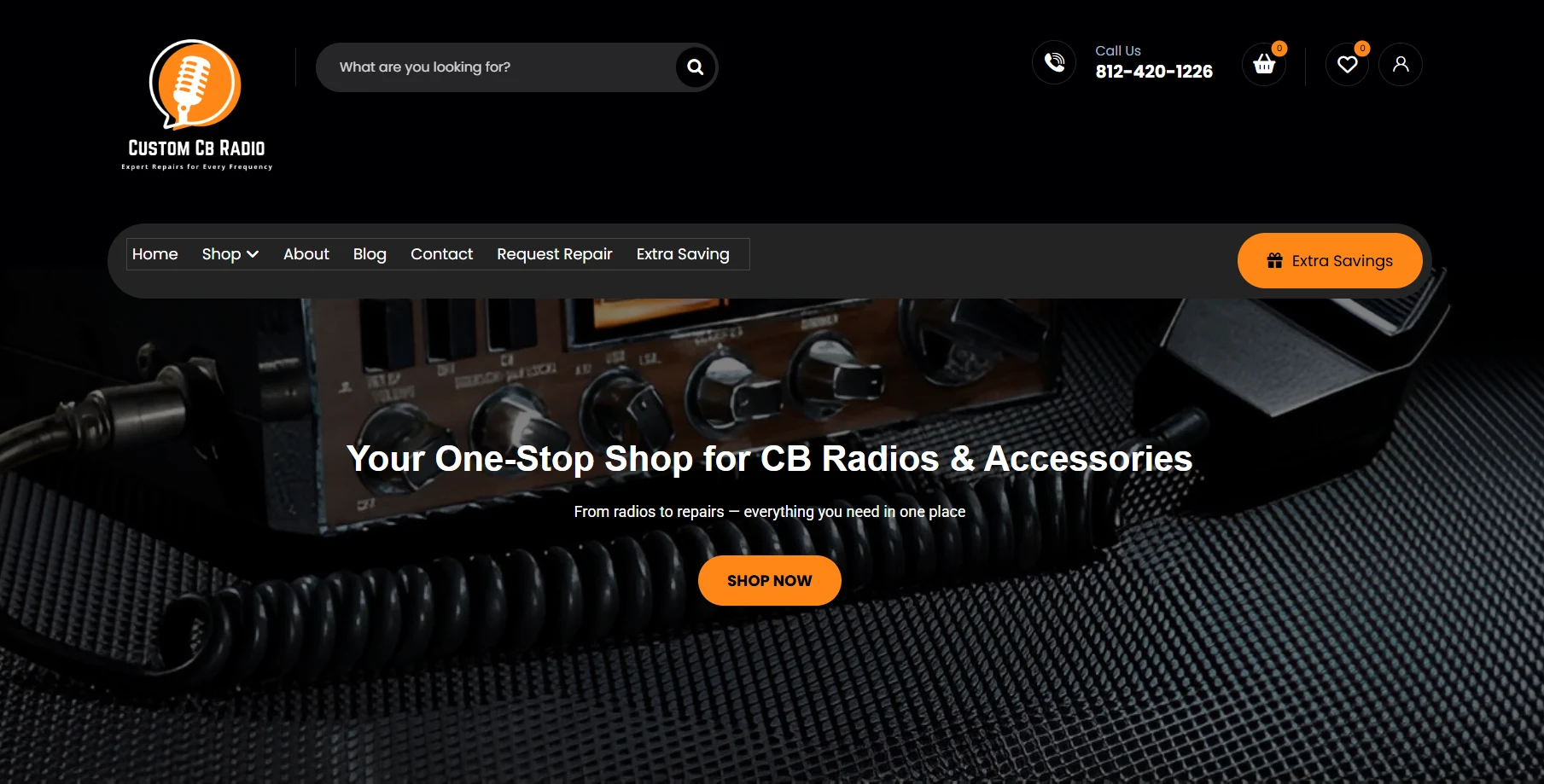
The finished project separates major shopping paths from service and educational paths instead of forcing everything into one long page. Product categories, product cards and calls to action give commercial visitors a direct route into the catalog. Repair-oriented messaging creates a separate path for visitors whose need is diagnostic rather than transactional. This type of segmentation is useful for SEO because each intent can be supported by a more specific landing page and internal-link path.
Content and conversion priorities
A specialist ecommerce website needs useful context around products, not only grids of items. The project demonstrates a structure where category navigation, store content, repair information, supporting copy and trust elements can work together. Calls to action are tied to the next logical action—shop, request repair help, or explore the relevant equipment—rather than repeating one generic button everywhere.
SEO and technical foundation
For an ecommerce project like this, the ranking foundation depends on crawlable category links, stable product URLs, useful category copy, canonical consistency, image optimization, structured page hierarchy and disciplined handling of filters or duplicate URL parameters. The Site Bloomy SEO framework also keeps performance, mobile layout and internal links in the same implementation plan rather than treating SEO as a plugin setting after launch.
What similar businesses can take from it
The main lesson is to model the site around real customer tasks. Product-led businesses with an expert service component should not hide their expertise behind a store grid, and service-led businesses should not make product discovery an afterthought. A clear split between buying, learning and requesting help creates better landing pages and stronger internal-link opportunities.
Related implementation paths
Ecommerce Web Design · WooCommerce Developer Egypt · SEO Services Egypt